


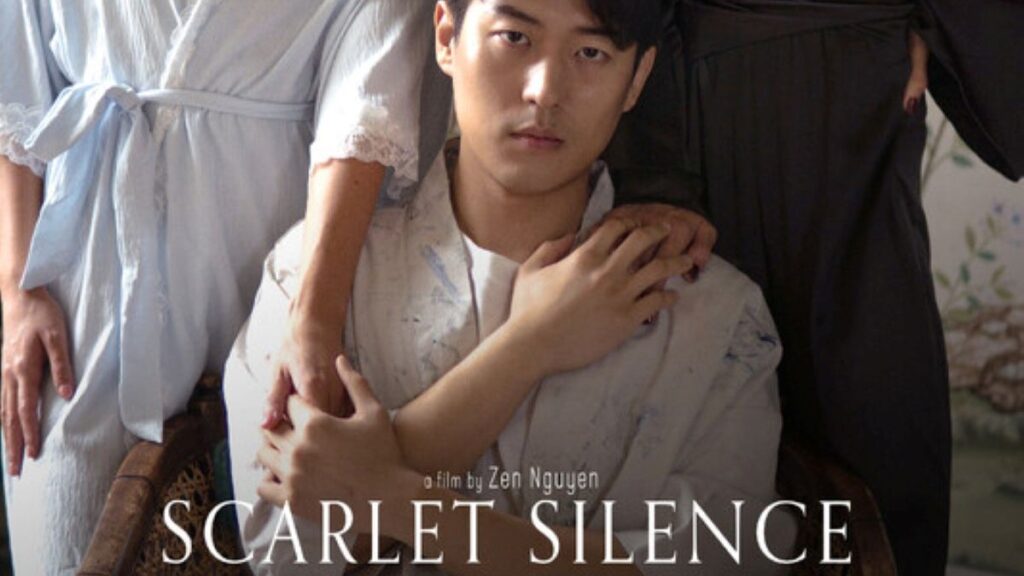
Zen Nguyen’s Scarlet Silence stunned audiences with its striking visual style and powerful emotional pull. In our interview, Zen let us in on her creative process, the careful planning behind every frame, and why having an all-female team of department heads mattered so deeply to the film’s identity.
Where did your passion for filmmaking and storytelling begin?
It started when I was working as a TV commercial producer. I loved the creativity and challenge of conveying a message in a short, visual format. But at the same time I always felt there was more I wanted to explore. Deeper emotions, complex characters, and stories that could really linger with an audience. So filmmaking became the way to bring those stories to life.
Scarlet Silence is beautifully shot – were there any specific films that inspired the cinematography?
The cinematography of Scarlet Silence was inspired in part by Portrait of a Lady on Fire (2019) and The Handmaiden (2016). Both films have a strong, painterly approach to framing, lighting, and colour, which Mari (DOP) and I admired and wanted to reflect in our own work. They influenced how we approached composition, the use of natural light, and creating a sense of sensual intimacy and tension in each frame.
What is the most creatively challenging scene you’ve directed so far? Were there any moments in this film you found particularly difficult to execute?
The most challenging scenes in Scarlet Silence was the intimate moment between Harvey, Mimi, and Zoe, where love, jealousy, and tragedy collide. Capturing emotions while maintaining a visually symbolic aesthetic. Compositions inspired by Munch’s paintings Jealousy and Vampire (Love and Pain). It was an opportunity to explore vulnerability, tension, and emotional depth in a way that reflects the characters’ inner worlds.
How did you navigate directing your actors in such emotionally intense scenes?
For these intense and intimacy scenes, we worked closely with our Intimacy Coordinator to ensure a safe and respectful environment for the actors. We rehearsed and choreographed each moment so the performances felt authentic while maintaining boundaries and comfort for everyone on set.
What were the key themes you were aiming to explore within this piece? And what message would you like viewers to take away with them after watching your film?
Scarlet Silence explores themes of love, jealousy, self-discovery, and the human desire for connection and completion. The film explore how intimacy, ambition, and longing intersect, and how these emotions can both inspire and challenge us. Through the story of Harvey, Mimi, and Zoe, I hope viewers reflect on the complexity of human relationships and the ways we seek validation, love, and understanding. Whether through art, romance, or self-expression.
You’ve noted that you had all-female heads of department on Scarlet Silence. How important is female empowerment within the industry to you? What changes towards women do you hope to see next in film and television?
Female empowerment is very important to me. On Scarlet Silence, our all-female heads of department came from diverse backgrounds, which brought unique perspectives and strengthened the collaboration. I hope to see the industry create more space for women of all backgrounds to thrive in leadership roles, leading to richer and more authentic stories on screen.
Have you noticed a shift in how female-driven stories are being received in UK and international indie film circuits?
Yes, I’ve seen a real shift in female-driven stories are being received with more openness and curiosity, especially in indie circuits. Audiences are hungry for authentic, layered perspectives. Though there’s still work to do in giving women, particularly women of colour, consistent opportunities and visibility.
With your extensive experience as a director and producer in mind, what advice would you give to young people with an interest in filmmaking, hoping to create short films?
My advice is to start creating with what you have and stay true to your vision. Surround yourself with supportive collaborators, and don’t be afraid of mistakes – they’re part of the process. With short films, the most powerful tool you have are your voice and perspective, not budget or scale. Authenticity is what will truly connect with audiences.
And, finally, what is next for you? Tell us about any upcoming projects, where you hope your passion will take you next, and what you’re most looking forward to in the future!
I’ve just wrapped a police drama TV series. And now working on my debut feature, which I aim to shoot next year. I’m excited to keep telling stories that challenge and connect with audiences, while championing representation both on screen and behind the camera.