


It was in 2023 when I attended BFI’s first Film on Film Festival and had never before experienced something quite like seeing a film projected through actual film before. Not only did I get to experience this magic of cinema, but I also attended panels where filmmakers and creatives discussed the importance of preserving films on film. It was absolutely wonderful and drove me to admire and constantly want to see films on film. Since June 2023, I have seen more films on 35mm and 70mm than I ever would have before. And I know I will continue to engage with the medium forevermore.
Two years later, Film on Film returns to the BFI. Celebrating not only films, but of the very medium itself as well. Throughout the four days, from June 12-15th, every film screened as part of the festival was projected on film. There were several of special presentations, nitrate prints, old films rediscovered, black and white cinemascopes, documentaries, experimental pieces, 70mm prints, 35mm prints, even IMAX prints, along with talks and workshops to get people involved.
Day One – Thursday 12 June
On day one of the festival, the BFI balloted two screenings of the original 35mm print of Star Wars (Lucas, 1977) to its members. I, sadly, was one of the many who were not successful in attaining a ticket. However, I still managed to attend “The Star Wars Influence”, a panel held by professionals in BFI’s Blue Room. The panel was hosted by Douglas Weir, supervisor for BFI distribution, with guests Jamie Benning and Paul Collard. Experts on both Star Wars and the technology, the three men discussed the lasting impact Star Wars and George Lucas himself had on filmmaking and its technology.
During the panel they discussed the 1970s as George Lucas began the process of making change in the industry. During the era when the studios began to crumble, into the later 70s once Star Wars was released, the 80s, and how it changed the industry. And ending with 2025, and how important it is that they are able to screen the original Lucas print at the festival. A print that was projected from a dye transfer IB Technicolor print.

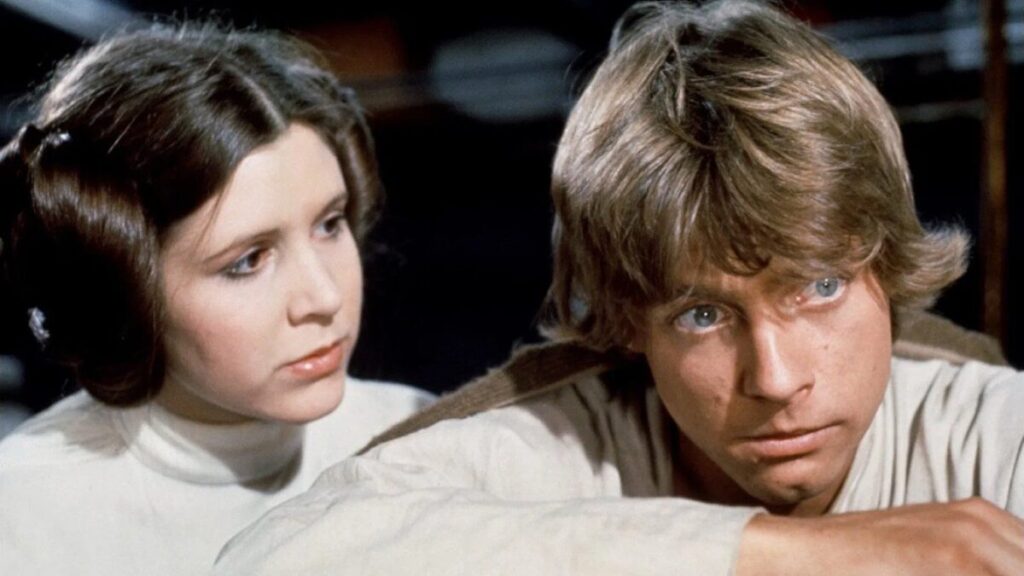
Starting off the talk, they showed a clip of George Lucas himself back in 1971 when he discussed how unimpressed he was with Warner Brothers. As the climate during that time was more about having films made by studios to create profit. And less concerned with buying films from the passionate creatives who truly wanted to make the film. Lucas was in his 20s, and like all people in their 20s, he wanted to break the system. The difference for him was that he actually did it.
It all started when Lucas chose to create American Graffiti (1973), and it shot him forward with the ability to create more of what he wanted. With the funds and popularity Lucas gained through his success with American Graffiti, it allowed him to receive funding backed by 20th Century Fox. Combined with his own funds, he created Star Wars (1977).
After Lucas changed the trajectory of cinema and its technologies with Star Wars, the panel went on to discuss the specific equipment he used and changed for the better. They discussed equipment, such as VistaVision, and optical printers from the 1950s. And how Lucas brought these back out from the dusty closets they sat in and used them again. Together with a team, Lucas created Industrial Light and Magic (ILM), where they were dedicated to figuring out how to change the technologies used for filming for the better. He changed a lot, he went from filming on film, to editing his film digitally, back to film, and then eventually he chose to shoot Star Wars: Episode I – The Phantom Menace (1999) all digitally.
The panel lasted just under an hour, and the three discussed many important factors of the industry that were changed by Lucas. Of course, they did not have enough time to cover his entire legacy. They did, however, jokingly remind the audience that they could watch many documentaries on the subject, both on YouTube and on Disney+.
Not only did Star Wars revolutionize the cinema experience and fandoms, but it also had an ever-lasting impact on film technology. It allowed for motion control photography to be pioneered forward, and created ground-breaking composition, and advanced lab techniques that changed the standards held by the industry.
Day Two – Friday 13 June
Day two of the festival had several events for the public and interesting screenings available. Most of day two I spent in the environment of the BFI, watching the public and guests enjoy the atmosphere and attending screenings and events.
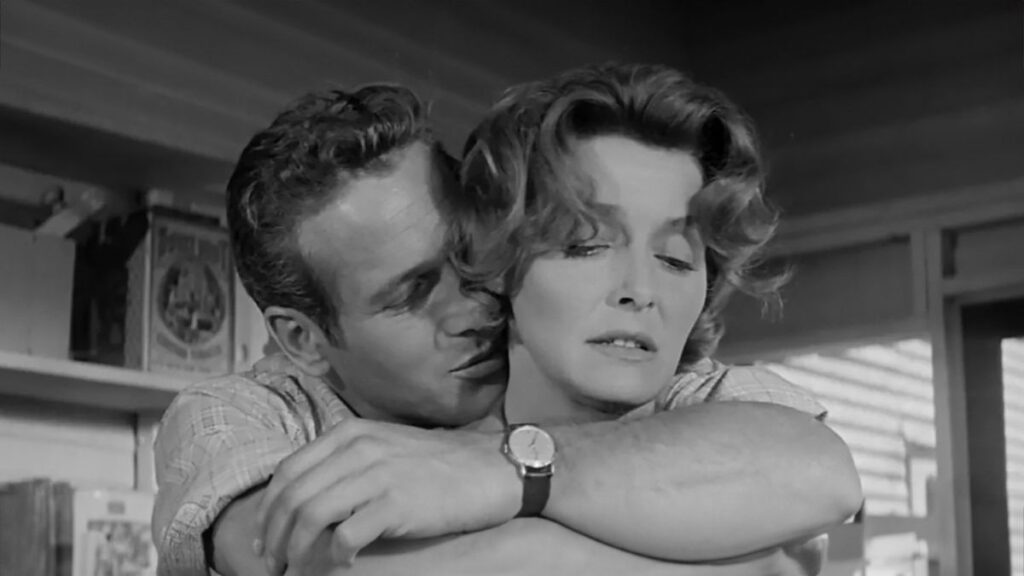
Hud (Ritt, 1963) – 35mm
I attended the screening of the 35mm print of Hud (Ritt, 1963). The film screened as part of the festival’s Black and White Cinemascope programme. Focused on sharing the experience of the beauty of black and white on the big screen. Christina Newland, film critic and reviewer, introduced the film to the BFI audience. She referred to collaborations between director, Martin Ritt, and cinematographer, James Wong Howe, and this being one of Paul Newman’s best roles. The projection screened, as informed to the audience, might have had more scratches than another, but this specific print had a deeper tone to it allowing the blacks to be seen more fully.
This western follows Hud Bannon (Newman), and his nephew, Lon ‘Lonnie’ Bannon (Brandon De Wilde), as they live on Hud’s father Homer Bannon’s (Melvyn Douglas) ranch. Hud is a ruthless drunk most of the time, and everyone and everything he touches ends up hurt. There is a bitterness between father and son as Hud has constantly gone against his father’s advice. Lonnie’s father died awhile back, and he is now torn between his love for his grandfather and his admiration for is uncle Hud. As the young man in the house, Lonnie is inflicted with this strain and feels it deep within himself. Struggling to get along day-to-day, their lives turn into complete chaos when the cattle on the farm are diagnosed with foot and mouth disease, and a decision must be made to secure their financial future.
Watching Hud with a packed audience in the BFI allows for more immersion into the film itself. The audience laughs, gasps and reacts with each needed moment in the film. Though the plot itself is filled with sorrow, and no one truly gets a happy ending, the film print itself was spectacular. There is something so unique about seeing a projection on 35mm. Just like Newland said during her introduction, the grain and the grit are there, but there is deep shading and tone in the blacks and whites that you could not receive any other way.
Day Three – Saturday 14 June
35mm Projection
Bringing the projection booth to the public, the BFI installed a projector and platter system in the main foyer of their building, allowing the public an up-close chance to see how films were projected in most cinemas prior to the change into digital projection. Film fans and members of the public gathered around to watch the equipment, in full view, as they were screening a surprise BFI Distribution print.
Surprise! They projected Singin’ in the Rain (Kelly & Donen, 1952) and North by Northwest (Hitchcock, 1959). Even though the films had no sound, seeing the projectors at work, and the crew as well, was truly a behind the scenes experience. What a great time!
Souvenirs for the public were also available. Leftover promotional print clippings from Joker: Folie a Deux (Phillips, 2024) were given out. As well as from what I can only guess to be the Keanu Reeves film, The Whole Truth (Hunt, 2015).
Don’t Look Back (Pennebaker, 1967) – 35mm
At 18:10 in BFI’s NFT3 screen, Laura Tenschert from the Definitely Dylan podcast introduced the audience to the legendary Bob Dylan documentary, Dont Look Back (Pennebaker, 1967). Screened as part of the documentary section of the festival, the BFI not only chose the film for the love of Dylan and cinema verité, but to celebrate the centenary of another legendary filmmaking creative, D.A. Pennebaker. We, the audience, also lucked out and were shown a special 16mm print of director Kurt Lewenhak’s 14-minute short film Pete Seeger and Friends (1964) before the feature.
The short film is shot like a home video. Several short minutes of legendary folk singer Pete Seeger performs with a small crowd in a London pub. The grainy black and white, along with the cuts between Seeger and the crowd, allow for a comforting and familiar feel.
Dont Look Back is known as Pennebaker’s landmark film, both forming the filmmaker’s style and status, as well as a focus into Dylan’s rapid growth towards the status of ‘icon’ he is known for today. Pennebaker has spoken of Dylan in the past in terms of his charisma, mysterious persona, and his rebellious path transforming from folk hero to rock star. The film itself follows Dylan on his 1965 tour of England as he goes from hotel room, to press interviews, to pieces of his time on stage. Originally filmed on 16mm, this screening was a blown up 35mm print.
For me, after having previously watched I’m Not There (Haynes, 2007) and A Complete Unknown (Mangold, 2024), watching Dont Look Back on big screen 35mm was a surreal experience. From portrayals of Dylan in the two biopic style films, to a raw up-close look at him through the eyes of Pennebaker, Dont Look Back provides something chaotic yet real. Though there are many other documentaries of Dylan in the world, this film is perhaps one of the most accurate as it looks into his true persona. That being said, he is a man of many secrets.
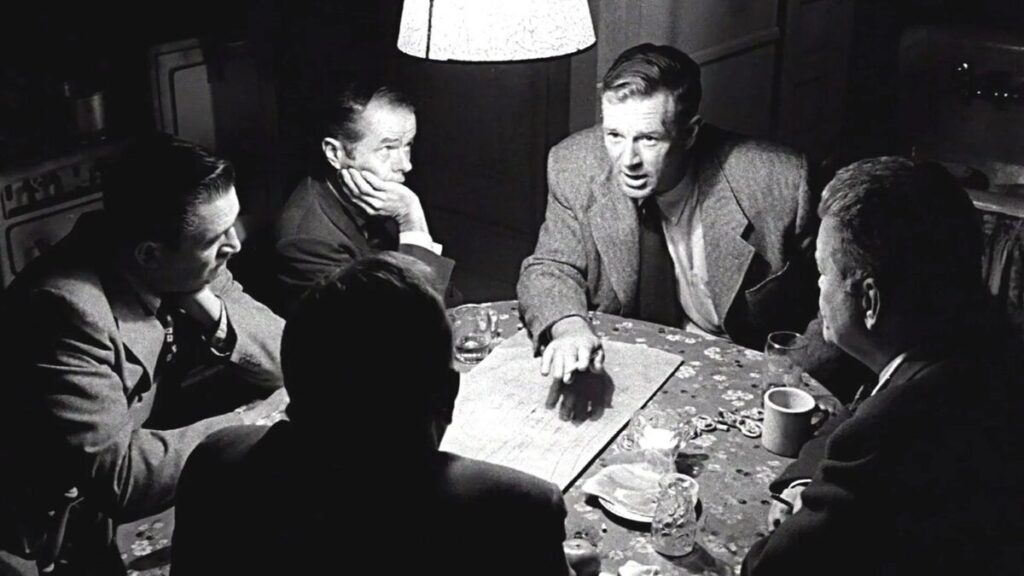
From Stanley Kubrick’s Personal Collection: The Killing (Kubrick, 1956) – 35mm
The last film of the evening was something else. A special presentation experience, a screening of the unique prints from Stanley Kubrick’s own personal collection. His very first short and breakthrough feature, two early Kubrick classics; The Killing (1956) and Day of the Fight (1951). Senior Curator of Fiction from the BFI National Archive, James Bell, introduced the films to the audience this evening.
Before Kubrick’s feature, Day of the Fight was screened on 35mm. In 13 short minutes, Kubrick shows his masterful craft with such visual flair. Kubrick follows a day in the life of Irish-American middle weight boxer Walter Cartier as he waits for his night time fight. The story is shown completely through visuals, and the only speech comes from the narrator. Incredible storytelling when the audience becomes invested in a short film when there is no dialogue between the characters. A documentary short, to say the least, the film provides a fictional quality with voice-over narration. If there had been more dialogue, audiences could have even been convinced that this was a television special.
With only two previous features, and a few shorts, Kubrick’s The Killing served as his breakthrough film while reinventing the heist film at the same time. Johnny Clay (Sterling Hayden) is a criminal, plain as that. His newest plan, before he gets out and marries his lady Fay (Coleen Gray), involves robbing a racetrack. To pull it off he recruits a sharpshooter, a crooked police officer, a bartender, and a betting teller named George (Elisha Cook Jr.), among others. All seems ready to go, and fool-proof, until George tells his wife Sherry (Marie Windsor) about the scheme, and she develops a plan of her own.
Though simplistic in its chronological layout, the cinematography, combined with the seedy grains in the film, create this allure towards the depths of the world of robbery. This high-contrast contact print provided crisp deep black and ultra-stark whites. Stellar performances combined with a comedic element; this heist film provides laughter and surprise for the audience. Dialogue that surpasses anything that is created today, it is true when they say only Kubrick could have created a film-noir masterpiece such as The Killing.
Day Four – Sunday 15 June
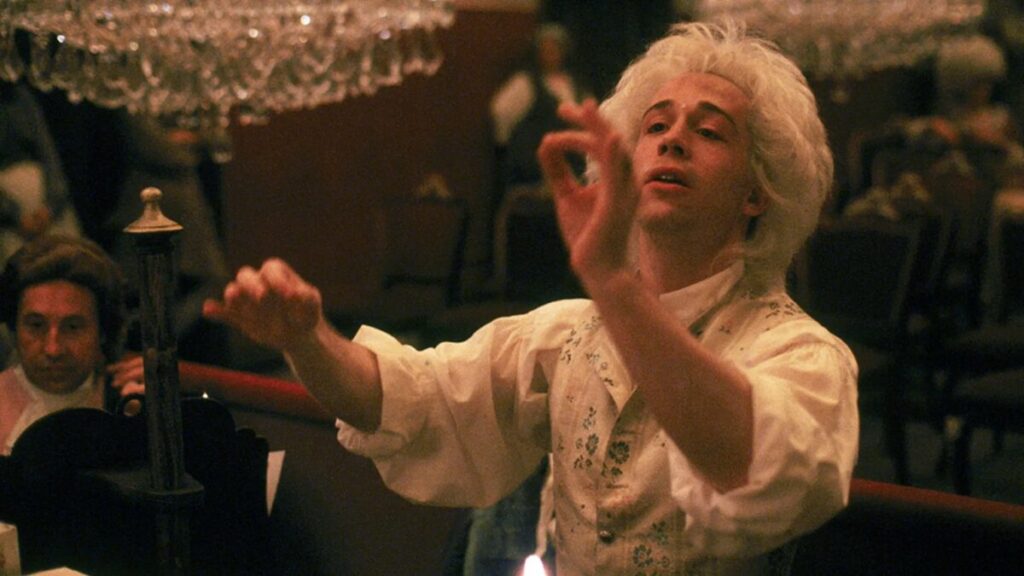
Amadeus (Forman, 1984) – 70mm
Introduced by the Assistant Curator of Television from BFI National Archive, Chantelle Lavel Boyea, this screening was a rare opportunity for audiences to experience the film on an original 70mm blow-up release print. Originally a hit play on both the West End in London and Broadway in New York City written by Peter Shaffer, the writer went on to recreate the show for film.
While the play had been considered unfilmable, Shaffer and Forman proved the world wrong as the film went on to win eight out of eleven Oscars it had been nominated for, including Best Picture. Donated by the Saul Zaentz Company to the BFI National Archive in 2006, this print allows the audience to experience the full force of operas, concertos, and choruses from its magnificent 6-track magnetic sound.
Amadeus dramatically recounts the last decade of the 35 years of Wolfgang Amadeus Mozart’s life. Told from the perspective of composer Antonio Salieri (F. Murray Abraham), the film follows along as his resentment for Mozart (Tom Hulce) grows more and more poisonous. As Salieri’s work becomes overshadowed by the power and talent of Mozart, his inner torment increases. The film follows their relationship, as Salieri becomes somewhat of a mentor, and Mozart does not see where the path will lead.
As the film began, I started wondering where I had seen it before, it must have been pieces of the film as it aired on the television when I was younger. However, once we got to a specific point in the film, I began to gape in awe. The sound, the colour, and the plot within it were all absolutely breathtaking. As I have said, it makes it all the better when such a highly acclaimed and highly rated film surpasses your expectations.
Journey to Italy (Rossellini, 1954) – 35mm
New 35mm prints are being created to preserve film for the future. Roberto Rossellini’s 1954 Journey to Italy screened on the last day of the Film on Film Festival as part of the New 35mm Prints programme. The film was introduced to the audience by Giulia Saccogna, the BFI’s Programme and Research Coordinator. This new 35mm film print was created using the original camera negative, courtesy of Istituto Luce-Cinecittà at Haghefilm in 2023. The making of this print was possible through BFI National Archive with funding from the National Lottery and support from Keep Film on Film campaign donors.
In Rossellini’s Journey to Italy, a British couple travels to Naples to sell property from a recently deceased relative. Through their travels to the hot cities of Italy, Katherine (Ingrid Bergman) and Alexandar ‘Alex’ Joyce (George Sanders) learn that their marriage is not all what it used to be. As one reminisces on a poet’s Italian suggestions, the other flirts and mingles with the locals. Combining cruelty and cynicism, will their marriage last through what should have only been a simple trip to sell a piece of property?
While some may believe that Journey to Italy is truly romantic, showcasing both human love and beautiful surroundings. I, however, spent most of the film feeling it was too slow moving. There was not much interesting occurring, as with many films in Italian Neorealism. On top of the dull story, thankfully, was the allure of Ingrid Bergman, bringing some true beauty and talent to the film.
Another round of the fabulous BFI Film on Film Festival has come and gone. Though this was only their second edition, they continue to knock it out of the park. Providing events for all and easily accessible screenings, the BFI truly wishes to share the importance of keeping film on film with the country.
Compared to attending the very first edition of Film on Film back in 2023, I enhanced my experience greatly this year by attending more events and screenings. Even if the films did not end up being as enjoyable to me as they might have been to some, it still will never change the effects of watching it for the first time projected on film. It is with my great hope that they continue this festival and continue to share the love of film (the stuff itself!) with the world.