


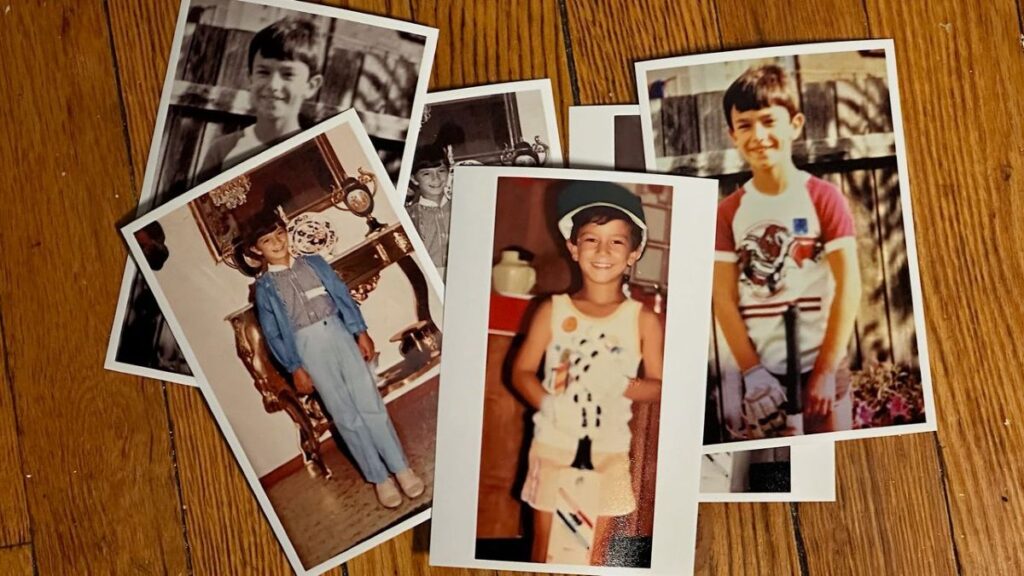
Canberra-born actor, advocate, and writer Nathan Spiteri discussed the themes of the recent documentary If You Tell Anyone with me. The film follows Nathan’s recollection of his childhood sexual abuse, its aftermath, and his ongoing recovery. Through the documentary, Nathan and the filmmakers aim to connect with survivors and their loved ones, dispelling harmful narratives and offering reassurance. They do so with the crucial understanding that recognition may be lifesaving.
The subject of this documentary is deeply sensitive, but also a critical discussion that needs to happen more often. What was your experience balancing the two realities?
Balancing that sensitivity was one of the most challenging and intentional parts of the process. I was always conscious of honoring the pain without sensationalizing it; telling the truth with care, dignity, and humanity. The goal was to create a space that felt safe enough to listen, but honest enough to spark real conversation. If we soften it too much, we miss the reality; if we push too hard, we risk losing people. Finding that balance was about leading with empathy, purpose, and respect for every survivor watching.
Throughout the documentary, you offer many messages of reassurance for victims and their loved ones. If you could single out one core message or piece of advice you hope all survivors—particularly male survivors of childhood sexual abuse—what would it be?
If there’s one core message I hope every survivor takes from this documentary, especially male survivors of childhood or adult sexual abuse, it’s this: What happened to you was not your fault, and you are not broken.
You don’t have to carry it alone, and you don’t have to have all the answers to begin healing. Speaking your truth, in your own time and in your own way, is not weakness; it’s the first step toward reclaiming your power, your life, and your future.
You speak very candidly about the events of your abuse, as well as your past feelings of shame. In telling your story, did that honesty serve as a way to empower others who feel ashamed to speak about traumatic events directly?
Yes, that honesty was absolutely intentional. By speaking openly about both the abuse and the shame that followed, I wanted to show others that shame survives in silence, but loses its power when it’s named. My hope is that when survivors hear someone tell the truth without flinching, it gives them permission to believe they can do the same, in their own time, in their own way—and realize they are not weak, broken, or alone.
I’m aware you have told your story through a memoir, a TED Talk, and now, of course, this documentary. I also recently came across your plans for a feature film. How, if at all, did your experience differ across storytelling formats?
Each format asked something different of me. Writing the memoir required deep reflection and time. It was private, slow, and allowed me to unpack the full complexity of my inner world. The TED Talk distilled that journey into a single, focused message meant to open hearts quickly and start a conversation. The documentary was more immersive and vulnerable, inviting others into the lived reality of the story as it unfolded on screen. The feature film, however, allows for a different kind of truth—one that uses character, metaphor, and cinematic language to reach people emotionally, sometimes in ways facts alone can’t. Each medium has deepened the story, but the purpose has remained the same: connection, awareness, and change.
Talking more about the plans for a film, how did you feel about the liberties and devices of fictionalization that come into a project like that, and how hands-on were you with the scriptwriting?
I was very mindful of fictionalization, because the truth of the story is sacred to me. I see creative liberties not as a way to dilute reality, but as tools to protect people, condense time, and express emotional truth in a cinematic language. I’ve been deeply hands-on with the scriptwriting process, ensuring that while characters or moments may be shaped for storytelling, the heart, integrity, and lived truth of the experience remain intact. The film isn’t about exact replication; it’s about emotional honesty and impact.
How were you kind to yourself and your recovery throughout the process of this documentary?
I was kind to myself by moving at my own pace and honoring my limits. I made sure I had strong support around me, stayed connected to therapy and grounding practices, and gave myself permission to step back when things felt heavy. Most importantly, I reminded myself that telling my story didn’t mean reliving the pain alone; it meant sharing it with care, intention, and compassion for the person I once was and the man I am now.
Thank you for taking the time to share your story and your continued advocacy for victims of sexual abuse. Can you tell us a little more about your plans moving forward?
Thank you. Moving forward, my focus is on expanding the impact of this work—bringing the documentary to wider audiences, continuing development of the feature film, and deepening my advocacy through education, speaking, and community-based initiatives. I’m committed to creating spaces where survivors feel seen and supported, while also working with organizations, schools, and creatives to change the conversation around abuse, healing, and resilience on a global scale.
