


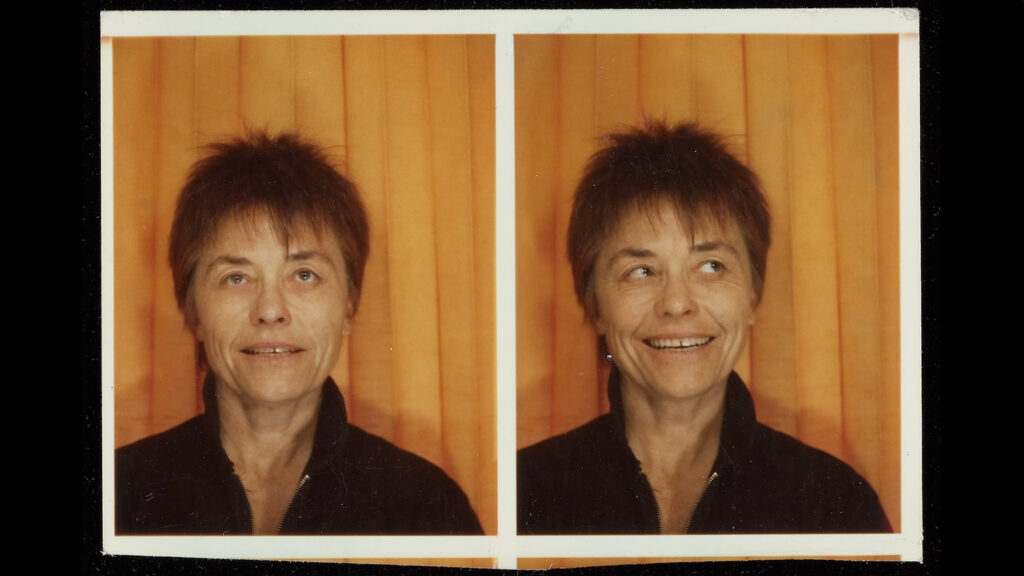
“I was born when I became a lesbian.”
Barbara Hammer was born in 1939. Though as noted above she would have told you she was not born until she became a lesbian, decades later. A feminist film director, producer, writer, and cinematographer, Barbara was a woman who sought to open a space for queerness to be welcome. From her early short films to her later not well-known feature, Nitrate Kisses (1992), she constantly worked for capturing the truth and passion in lesbian love.
Seven years after her death, documentary filmmaker Brydie O’Connor comprises over 90-minutes of footage. With help from Barbara’s wife, Florrie R. Burke, O’Connor dives deep into her exploration. Through this archive-driven film, Barbara’s live, work, and legacy as an iconic pioneering lesbian filmmaker is explored.
“…more than my life…it’s a history of queer art.”
Barbara did not shy away from any aspect of her journey once she started sharing her and the lesbian experience. Wanting to stay true to her legacy, O’Connor shared everything as well. Instead of simply showing Barbara’s films, or clips of the late filmmaker, O’Connor found and utilized a voice over of Barbara explaining every detail of what you see being shown in Barbara Forever. As Barbara explains, once she knew she was a lesbian, she knew there was something there she could put on the screen. Every new experience she had influenced each of her films that followed. By filming and sharing these with the world, she created a safe space. A space that would allow women to know their feelings are valid. That they are valid.
Though Barbara is well known, when watching Barbara Forever you begin to understand just how underground she is. O’Connor’s documentary takes us through Barbara’s journey into becoming her true self as a filmmaker and a lesbian. Reminding her audience how much men did not want women, particularly Barbara, to succeed in their careers. Perhaps it was the content that provoked this opinion from male counterparts, or maybe it was just the female perspective that did it. No matter the backlash, Barbara continued her pursuit in making content to make people uncomfortable.
Even Barbara Forever makes its audience tense. Purposely done so the thoughts the film provokes are worth beyond the discomfort felt. Barbara’s goal was to bring emotion back to structural cinema. While becoming a brief part of the New Queer Cinema movement, derived by B. Ruby Rich in the 1990s, her work began to spread late into her career. With a career beginning in the 1960s, the creation of Barbara Forever decades later, one can only hope a resurgence into Barbara Hammer’s films occurs. A hope that Barbara’s films can be rediscovered and in doing so allow a new generation of filmmakers to be inspired by the idea of creativity and openness in cinema.
Not only did Barbara make lesbian films, she also spoke up for what she believed in; Women’s rights, the queer liberation, all of it. With the current state of the world, it feels only fitting that O’Connor released this documentary now. Barbara spent almost every day of her life with a positive outlook. Presenting her films and her ideas back into the spotlight now could give the world a renewed perspective on life. Let us hope that Barbara Forever can bring about a new generation of independent queer filmmakers with a passion for truth.