


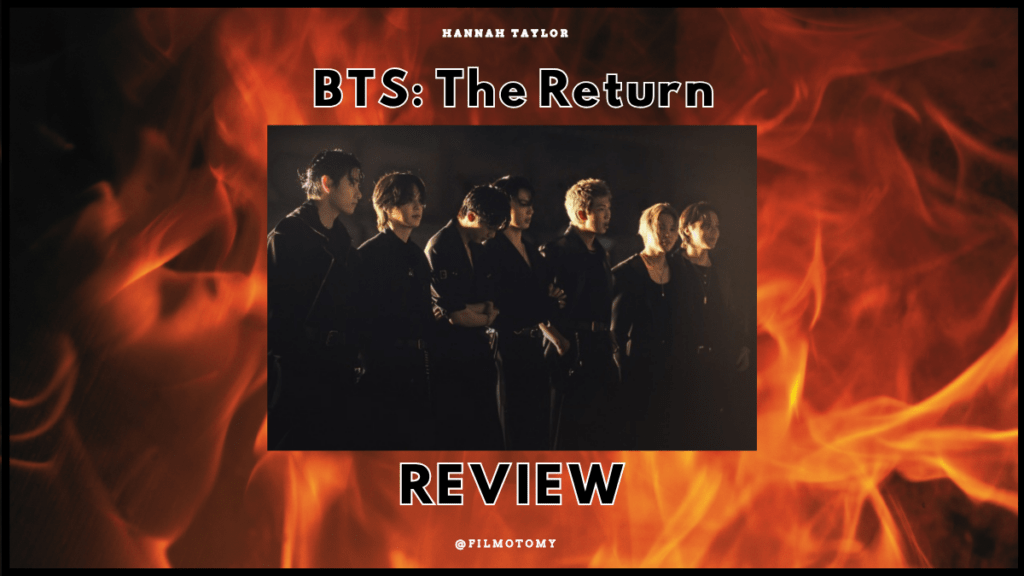
They might be best known as worldwide stars, but both ARMY’s (their fanbase) and some media outlets have branded them “humble kings.” And this documentary shows them as exactly that. For the seven members who make up BTS – Jin, Suga, J-Hope, RM, Jimin, V, and Jungkook – this documented journey marks their highly-anticipated comeback after nearly four years on hiatus. In Netflix’s BTS: The Return documentary we follow BTS on their journey to recording their latest album, “ARIRANG” in sunny Los Angeles. But in this new era, we see them reflect on their past accomplishments, appreciate their present, whilst enthusiastically moving into the future together.
Humble is the main word that comes to mind whenever BTS are interviewed. But much like his position in the group, RM takes the lead role in this documentary. His wise narration feels like a profound speech where he discusses the relationship between ‘time’ and ‘BTS.’ Forming a bond as close as family and spending time away from each other in the military has shown how ‘time’ is not on their side. However, RM expresses slight regret that mandatory military service placed the band on hiatus and separated them for some time. But now on the process of recording their latest album, they are all much more reflective together.
So this is our second chapter. But the one thing we have to hold onto is at our core, we’re still just a bunch of country kids from Korea. That unchanging truth.
RM, Leader of BTS


Image courtesy of Netflix
Grainy Footage Creates A Vintage Feel
BTS: The Return Documentary provides us with an inside look on how each member responds differently to the process of recording their latest album. But what we are looking at is a much more mature BTS. In focused interviews, each member discusses their achievements as a group, and what they hope this album will bring. Although, their moments of reflection brings us closer into their world and what it’s like to live like them.
It feels like we’re thrown back into the ’90s. The scenes feel as if they are mimicking vintage archival footage. It’s hugely reminiscent of boy band documentaries from groups that are BTS’ western predecessors, including the Backstreet Boys and NSYNC who have similarly experienced immense popularity.
Myself on stage, performing in front of many people. Dressed in awesome clothes, singing and dancing to amazing songs. I imagined this version of my future self. That’s how I’ve gotten to this point.
Jimin, BTS

Image courtesy of Netflix
There’s a beautiful vintage feel through the grainy footage. It creates a very nostalgic aesthetic like BTS are at the height of the 1990s boy band era. The group is made of singers, rappers, dancers, performers – and the list goes on. Although we also see the process of RM writing the lyrics for their upcoming album, “ARIRANG” and how he holds a heavy responsibility over the group, being their dedicated and hardworking leader.
An Inside Look Into the Recording Process
We see RM’s and Suga’s meticulous attention to detail in the album recordings; whilst the younger members – V, Jimin, and Jungkook seem more carefree and fun in their approach to recording in the beautiful realms of LA. Quite aptly they ‘swim’ in the pool and the sea – which is a nod to the leading track on their new album. However, it’s clear they have all managed to stay exactly who they are amidst all the glory and fame. But their likeability has no doubt caused them to dominate global charts. They remain talented, funny, and humble. But this is BTS truly ‘beyond the scenes’ as they hold our hands through the recording process.
Now I believe we will keep going until we’re old and gray. As long as that’s in all of our hearts.
SUGA, BTS


Image courtesy of Netflix
Cinematic Influences
BTS: The Return (2026) director, Bao Nguyen recently shared with Letterboxd the films that influenced him in shaping this documentary.
- Black Orpheus (1959)
- Don’t Look Back (1967)
- Let It Be (1970)
- Stop Making Sense (1984)
- Let’s Get Lost (1988)
- Unzipped (1995)
- Almost Famous (2000)
- Lost in Translation (2003)
- Metallica: Some Kind of Monster (2004)
- Somewhere (2010)
- The Master (2012)
- Billie Eilish: The World’s a Little Blurry (2021)
- Drive My Car (2021)
- The Beatles: Get Back (2021)
Inspired by South-Korean Cinema Classic, Oldboy (2003):
Interestingly, BTS were also inspired by cinema when on 3rd April 2026, they released their music video for the track “2.0” on their album, “ARIRANG.” Interestingly, the music video pays homage to Korean cult-classic film, Oldboy (2003). Dressed in suits, the seven members replicated the infamous corridor fight scene in this dark film noir music video.
Paying homage to South Korean director, Park Chan-wook’s work (the original scene took seventeen takes in three days to film) – it comes as no surprise that BTS would be inspired by a film from their roots. Particularly as the K-pop industry is known to take visionary cinematic approaches to their music videos. But BTS are once again staying true to their culture.
But other scenes in the “2.0” music video can also be seen to draw inspiration from the 2003 film. This includes the scenes in the set-up for the villain of the story, Lee Woo-jin’s penthouse, and the close-up shot of RM wearing sunglasses replicates protagonist, Dae-su Oh’s (Choi Min-sik) look from the film.


Bottom: BTS in their ‘2.0’ Music Video
Setting the Industry’s High Standards
Always looking stylish, BTS set the high standards for future K-pop groups. They are one hundred percentage deserved of their fame. After several years apart in the military, they come back together again like a group that never left. But at the heart and core of their twelve-year journey together is really how they have remained the same people. Although we seem to hear from some members more than others – RM, Suga, and Jimin are more prominent in this documentary with particularly Jin and J-Hope staying a little quieter.
Global Influence
Understandably as the documentary is set between Los Angeles and South Korea, we see how they mix these two cultures. Whilst the group wish their tracks to stay ‘rooted in Korea’ (a nod to their album release), they also grapple with the tension of pleasing their worldwide audience too as huge influential global stars. But their songs in recent years have mainly featured English lyrics and they stick to this formula in “ARIRANG” with the beats having a more traditional Korean sound to maintain that ‘BTS style’ their ARMY’s (fanbase) adore.
The seven of us together, if we walk together, I believe we can get through anything.
RM, Leader of BTS


Image courtesy of Netflix
In all senses, BTS: The Return is a traditional boy band documentary, featuring individual interviews and an ‘insider look’ behind the creation of their latest album. Interestingly, director Bao Nguyen has taken a fascinating approach to this documentary. The filmmaker has washed the footage with a grainy, vintage ‘90s film which transports us into the nostalgia of BTS. This concept works exceptionally well and feels as if the main goal here was to appeal to a more global audience. BTS has such a strong worldwide influence that mixing both their Korean culture and language with a Hollywood-style of documentary filmmaking has created a work of art that truly makes us invested in their journey.
Rating: 4 1/2 stars
You can read more reviews like Disney’s Hannah Montana 20th Anniversary Special here.