


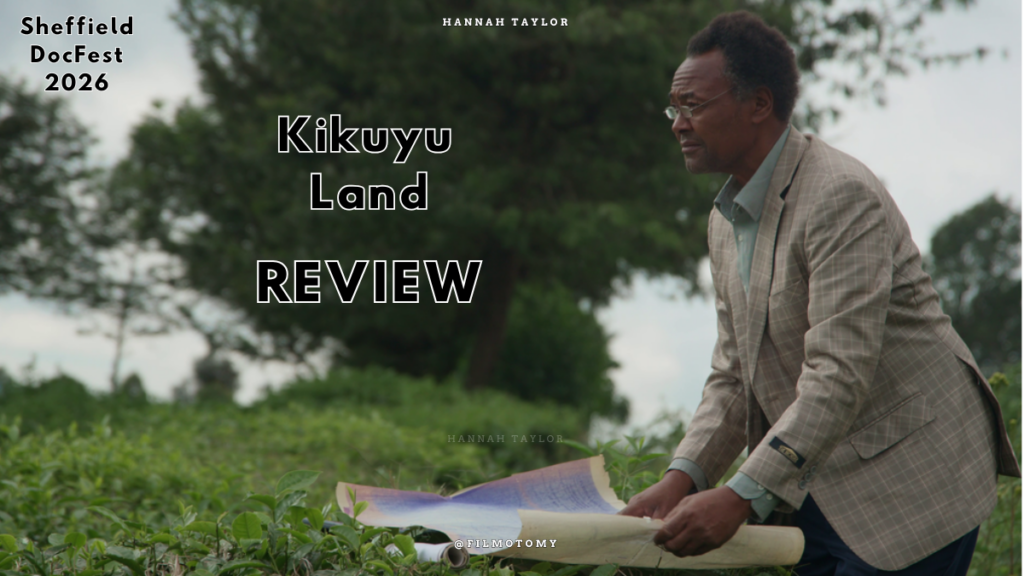
Kikuyu Land follows investigative journalist Bea Wangondu who co-directs this deeply captivating documentary feature alongside Andrew H. Brown. With its UK premiere at Sheffield DocFest 2026, Kikuyu Land was nominated for Sundance Film Festival’s Grand Jury Prize for World Cinema Documentary. And saw its international premiere at the CPH: DOX 2026 – nominated for the F:ACT Award.
Wangondu delves into two main subjects. From investigating Kenya’s colonial history to exploring the tea plantations regulated under major multinational corporations (MNC). Kikuyu Land specifically focuses on Unilever and the workers who have been left with both physical and mental scars. With MNCs and their long history of questionable working conditions, this documentary does not shy away from uncovering the true stories behind the hard-working Kikuyu community.


Right the Wrongs
Following the Mungai family, the documentary also investigates the once Kenyan-owned land which became seized by the British during their colonial rule. Wangondu leads us through the investigations, and we become fully behind her search to right the wrongs. A heart-rendering interview with an ex-worker in the tea fields reveals the emotional, physical, and sexual abuse herself and many other workers experienced. The indescribable power MNCs gave field managers then affected countless lives of tea workers. Many stories of which have sadly been left untold.
But as Wangondu delves deeper, she discovers a personal connection to her investigation. Her grandfather was previously involved in removing land from locals. Her link to the case brings the emotion through the screen and into the viewer. We feel for her as family history cannot be changed. Alongside her is Mungai N’ganga who fights for justice in recovering stolen land taken from his family. The sheer number of lands taken away from Kenyan’s people reveals corruption that stems far back into history.
An excellent direction – led by co-directors – Wangondu and Brown gifts the screen a sense of overwhelming sadness for the ex-tea workers. Their labour working conditions still effects them today. The documentary cuts between their two investigations. At times it moves fast to keep the audience on their toes. Sometimes it’s hard to keep up as the ball is always rolling. But as we learn watching along the way, it’s just the nature of journalism.


Image: Andrew H. Brown
Highlighting the Injustices
But it’s this investigative nature which makes the tone of this documentary so appealing. We’re not passive watchers but active participants heavily involved in the investigations. By first being reeled in with the emotional impact behind the individual workers’ stories to then delving into Kenyan’s history provides both a personal hook and an educational purpose.
Both Wangondu’s and Mungai’s determination to uncover the truth and highlight the injustices makes this much more than a documentary. But with such a large-scale investigation, it makes us question – how far can they go to reach the truth? When Wangondu visits the Unilever plantation we see the real dangers behind investigating a huge MNC. With the camera crew being pushed away and later with a journalist being captured at the airport further proves why this story needs to be told.
However, the fact Wangondu and Brown still told these cases despite the immediate danger represents the power of documentary filmmaking. Kikuyu Land marks investigative journalism at its very finest. It pushes the boundaries to reach the heart of the story by doing the right thing – telling the truth.
Kikuyu Land presents a story which certainly resides much further than the documentary’s runtime. The deep history and countless personal stories reach further into the unknown and shine a light on the people vs. MNCs. What is told here is just the beginning.
Rating: 3 1/2 Stars
Kikuyu Land is distributed by Journeyman Pictures and was showcased at Sheffield DocFest 2026.
You can read more reviews from Sheffield DocFest including A City In The Forest here.